Table Of Content

You’ll receive injections at multiple sites in the affected area to encourage new hair growth, which you could notice as soon as 4 weeks after treatment. Minoxidil, also known as Rogaine, is approved by the Food and Drug Administration (FDA) for the treatment of alopecia areata or androgenic alopecia. Any information published on this website or by this brand is not intended as a substitute for medical advice, and you should not take any action before consulting with a healthcare professional. See a dermatologist as soon as possible when you notice hair loss. But it can affect you psychosocially (how society and social groups affect your thoughts and emotions). It can also affect you psychologically (how you think about yourself and your behavior).
What can I expect if I have female pattern baldness?
Start by nixing traumatic styling practices from your roster, Dr. Lo Sicco says, such as aggressive brushing (no teasing!), excessive heat styling, bleaching, and chemical hair straightening. Minoxidil may irritate your scalp and cause dryness, scaling, itching and/or redness. Surgical procedures to treat baldness are not usually covered by insurance. Immediately after surgery, regardless of which option you choose, an antibiotic ointment is placed over the area, and you'll be recommended to apply it twice daily for the first seven days. In most cases, Mayo Clinic doesn't require a physician referral. Some insurers require referrals or may have additional requirements for certain medical care.
Best for Grays: Living Proof Scalp Care Density Serum
The promising horizon of hair loss treatments - Labiotech.eu
The promising horizon of hair loss treatments.
Posted: Thu, 08 Feb 2024 08:00:00 GMT [source]
Minoxidil usually needs to be used long-term to prevent hair loss and promote hair growth. When the treatment is stopped, hair loss will begin again within 12–24 weeks. Research from 2015 suggests the regular use of LLLT may help stop hair loss and promote hair regrowth. In short, this type of laser therapy appears safe and effective as a treatment for people who didn’t notice improvement with standard hair loss treatments. Below you will find a list of treatments used to treat hair loss in women.
When to connect with a doctor
When it comes to drug treatments for androgenetic alopecia, women are in a difficult position. While many drugs may work to some degree for certain women, doctors hesitate to prescribe them. What's more, drug companies aren't falling over themselves to test drugs specifically for their ability to prevent and treat female pattern baldness. Female pattern baldness can affect anyone assigned female at birth.
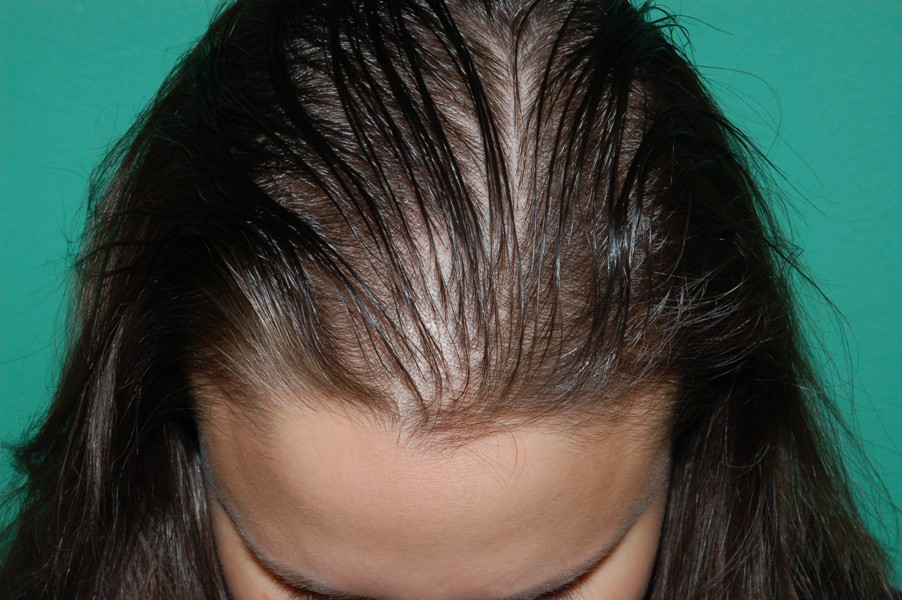
Female pattern baldness begins in the top-middle portion of your head. This falls around your center part, which is a natural line between the right and left sides of your hair. If you often style your hair to show a side part, you may not notice female pattern baldness immediately, but you’ll still see changes to the texture of your hair that indicate female pattern baldness near the center of your head. In the middle and later stages of female pattern baldness, you’ll lose hair on either side of your part and toward the front of your scalp. Once you've decided on where to scout your doctor, be sure your journey starts with a detailed medical history review, physical examination, scalp assessment, and sometimes specialized diagnostic tests.
Dermatologist shares product picks that can help regrow hair - TODAY
Dermatologist shares product picks that can help regrow hair.
Posted: Thu, 04 Apr 2024 07:00:00 GMT [source]
Mayo Clinic Minute: Expert advice for women with thinning hair
Early evidence suggests that injections of platelet-rich plasma may also help reduce hair loss. A plasma-rich injection involves a healthcare professional drawing the person’s blood, separating the platelet-rich plasma from the blood, and injecting it back into the scalp at the affected areas. The dermatologists we talked to agree that PRP injections tend to yield better results. Dr. Green says she typically treats patients with four monthly treatments followed by yearly or bi-yearly injections thereafter depending on the results.
Special Health Reports
These anti-androgenic effects can be used to help treat hair loss. Nizoral shampoo contains 2% ketoconazole and is prescribed not only for the treatment of scalp conditions, but also in combination with other treatments for androgenetic alopecia. A 1% version is now available over-the-counter, but it may not be as effective as the 2% prescription strength.

The type of hair loss, as well as your overall health and desires, determine which hair replacement procedures are most suitable. A healthcare provider or dermatologist can help you navigate treatment for hair loss or thinning hair. Hair loss is complicated, with no shortage of causes and potential factors at plan.
This medication should not be used in women during pregnancy or breast-feeding. If you answered yes to any of these questions, your dermatologist may recommend a wig or concealer. You should only take biotin, iron, or zinc when your blood test shows that you have a deficiency. For example, if you take too much iron, you can develop iron poisoning. Most patients return once a month for 3 months and then once every 3 to 6 months. This dermatologist is using a dermatoscope to examine a patient’s scalp.
Spironolactone is another blood pressure drug that’s been shown to have anti-androgen effects (which is why it’s commonly prescribed as an off-label treatment for hormonal acne). It prevents androgen receptors from activating, which reduces the influence these hormones can have on your hair follicles. An expert will know how to determine whether your hair will grow back on its own or if you need a personalized treatment plan to turn things around.
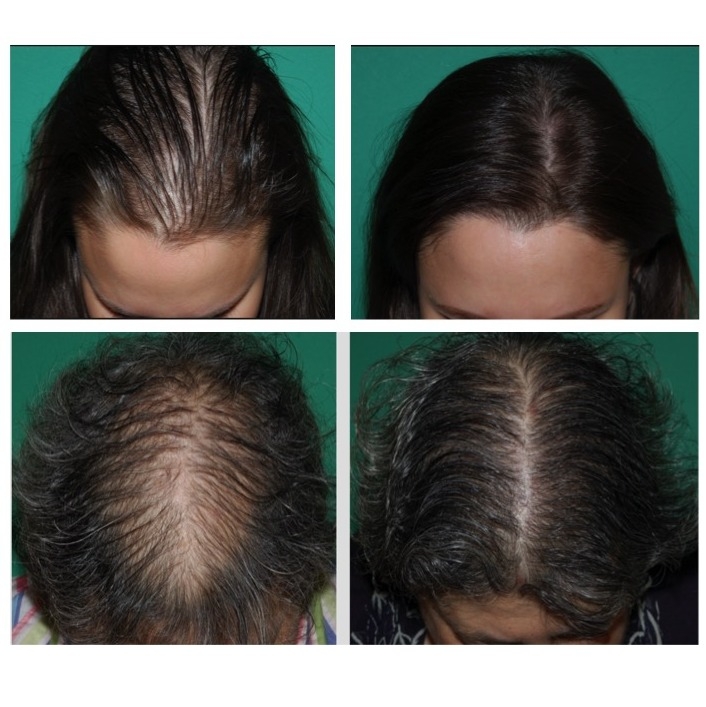
In hair transplant surgery, pieces of scalp tissue with the hair attached are typically taken from one area of the scalp and moved to areas of baldness. A 2020 study tracked 79 women taking spironolactone daily (doses ranged from 25–200 mg) for a minimum of 6 months. Nearly two-thirds of participants experienced some kind of improvement after 1 year.